
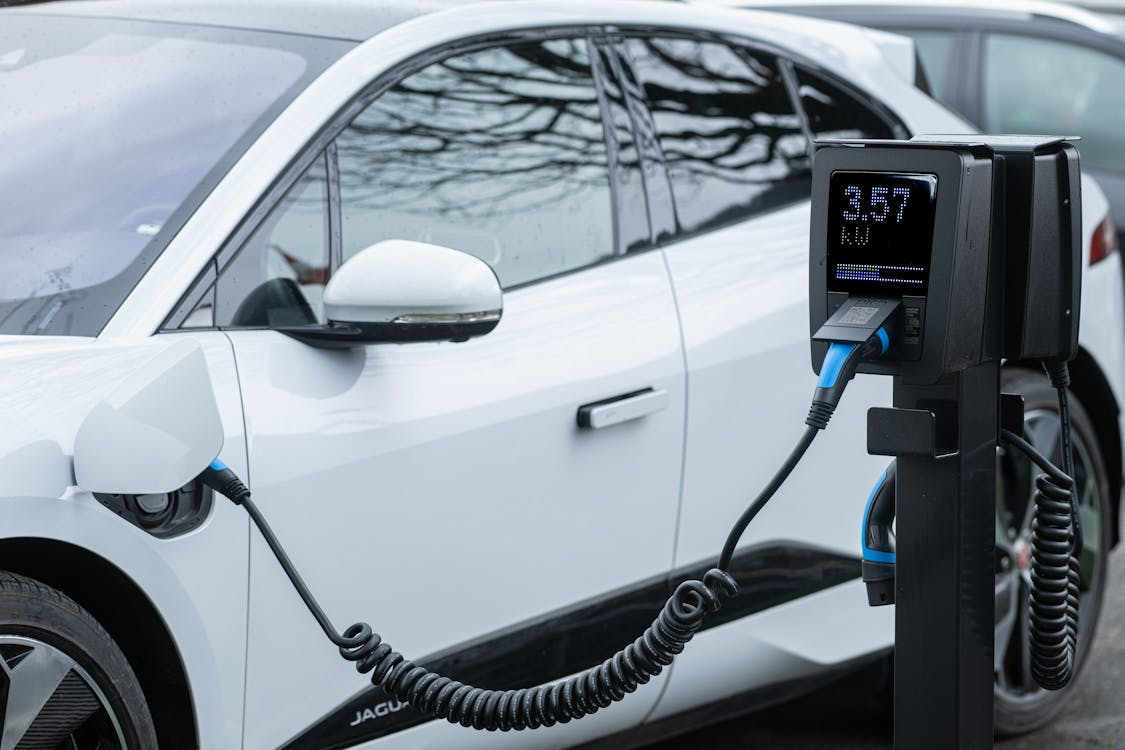
The electric vehicle (EV) revolution has moved well beyond early adopters. In 2025, global EV adoption trends show EVs entering a full-scale global surge, transforming transportation, reshaping automotive markets, and accelerating the transition away from fossil fuels.
What began as an environmental experiment has become the defining movement of modern mobility. Nations are racing to build charging networks, automakers are reinventing their product lines, and consumers are rapidly shifting preferences as EVs become more affordable, practical, and exciting.
This global surge reflects a convergence of technology, policy, and market demand. Battery innovations, government incentives, climate commitments, and the rise of new EV manufacturers all play a role. As adoption widens across continents, the EV market is becoming one of the most dynamic and geopolitically significant industries in the world.
Asia Leads the Charge: China, South Korea, and Japan
Asia remains the center of global EV growth. China dominates in both production and adoption, with millions of new EV registrations each year and the world’s most extensive charging network. Chinese automakers continue to expand internationally, offering lower-cost models that challenge traditional automotive giants in Europe and Southeast Asia.
South Korea plays a crucial role in battery technology and EV components. Korean companies are at the forefront of developing next-generation batteries, including solid-state prototypes that promise faster charging and a longer range. Japan, meanwhile, continues to innovate in hybrid technology and fuel-cell systems, contributing to a more diverse global EV ecosystem.
Together, these nations form the backbone of the global EV supply chain—from materials and batteries to complete vehicle production.
See The Supply Chain Rebuild: Post-Pandemic to Post-Crisis to explore how EV demand reshapes manufacturing networks.
North America’s EV Expansion: Competition and Infrastructure Growth
The United States and Canada are experiencing rapid EV uptake driven by federal incentives, expanding charging networks, and aggressive commitments from major automakers. Companies like Tesla, Ford, and GM are scaling production while launching new models across price ranges and vehicle classes.
Infrastructure investment is accelerating. Public charging stations are emerging in urban centers, rural areas, and major highways, reducing range anxiety and enhancing long-distance travel. Utility companies are upgrading grids to handle increased electricity demand, while states offer rebates and tax incentives to encourage adoption.
Commercial fleets, such as delivery vans, work trucks, and ride-sharing vehicles, are also rapidly electrifying, driven by cost savings and government mandates. The North American market is transitioning from early adoption to mainstream acceptance.
Check out The Green Energy Race: Who’s Winning on Renewables? to see how clean power accelerates EV adoption.
Europe: Policy-Driven Leadership and Sustainable Mobility
Europe remains one of the strongest EV regions due to progressive climate policies, strict emissions standards, and robust public investment. Countries such as Norway, Germany, the Netherlands, and the UK continue to lead in EV market share, with some nations approaching the phase-out of new gasoline-powered vehicles by the early 2030s.
European automakers are spending billions on battery plants, EV platforms, and smart-vehicle features. Meanwhile, the EU advances legislation to build continent-wide charging corridors and integrate renewable energy with EV infrastructure. Europe’s commitment to sustainability ensures that EV growth remains not just consumer-driven but policy-anchored.
Emerging Markets: Accelerating Adoption Despite Challenges
Developing regions are experiencing their own EV wave, though with distinct characteristics. In India, demand is soaring for electric rickshaws, scooters, and small urban vehicles. These affordable EVs help reduce pollution and offer low-cost transportation for millions.
In Southeast Asia, electric motorbikes are dominating new sales, particularly in Vietnam, Indonesia, and Thailand. Meanwhile, Latin American cities are investing in electric buses to reduce emissions and modernize transit systems. Africa’s EV growth is slower due to infrastructure gaps, but some nations are introducing policy incentives and exploring partnerships to build localized EV ecosystems.
These emerging market trends show that electrification is not limited to wealthy nations. It’s becoming a global shift across all income levels.
To see how climate pressures reshape systems, read The Future of Food: Global Shifts in Agriculture and Diet.
The Future of EV Technology: Faster, Cheaper, Smarter
Several innovations are accelerating EV adoption worldwide. Battery costs continue to fall, making EVs more affordable than gasoline cars in many regions. New chemistries reduce reliance on rare minerals, easing pressure on supply chains. Solid-state and ultra-fast-charging technologies promise to halve charging times while increasing driving range.
Software-defined vehicles are also redefining the market. Over-the-air updates, autonomous driving features, and smart navigation systems are becoming standard, transforming EVs into evolving digital platforms rather than fixed hardware.
Automakers and governments are also exploring vehicle-to-grid (V2G) systems, which enable EVs to store renewable energy and send it back to the grid, creating a distributed energy resource that supports power stability.
Don’t miss Quantum Computing on the World Stage for a look at next-gen technologies.
A Global Movement Reshaping Transportation
The EV surge in 2025 is not just changing what people drive; it is transforming industries, infrastructure, and global resource strategies. Nations that adapt quickly will benefit from cleaner air, reduced fuel dependence, and stronger positions in the future energy economy.
With the accelerating adoption of new technologies and rising global demand, the EV revolution is entirely underway, and it shows no signs of slowing.