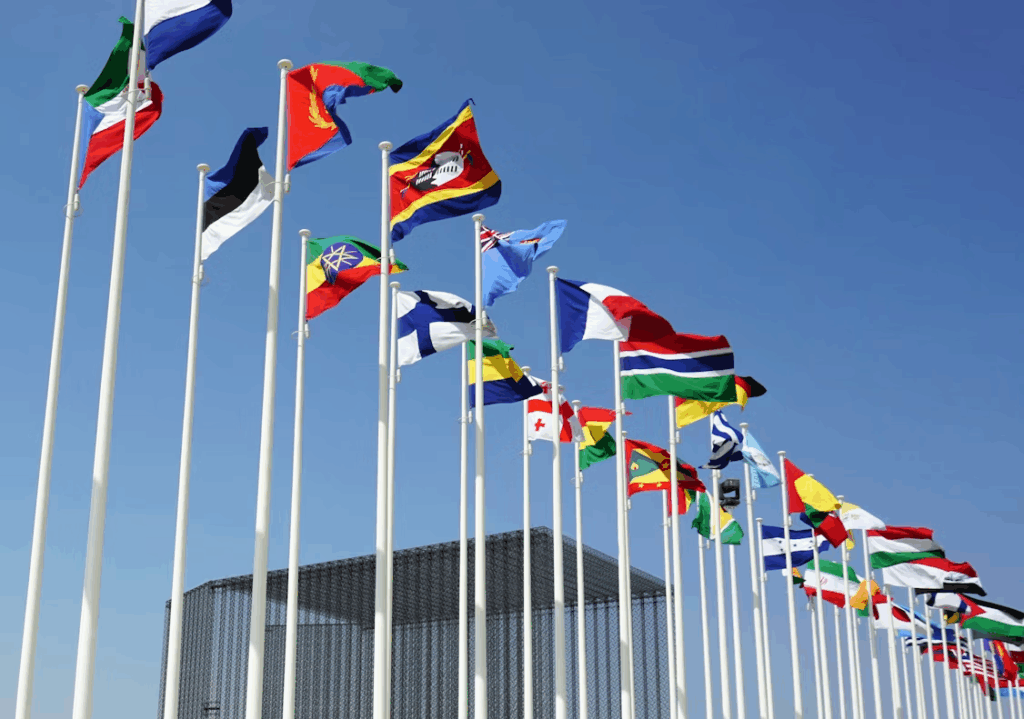

In 2025, global growth will be driven less by traditional economic giants and more by a new wave of rising nations with rapidly expanding industries. These emerging economies are reshaping trade flows, attracting record foreign investment, and positioning themselves as future global power centers.
Their influence extends far beyond GDP numbers. They are setting new standards in technology, manufacturing, and sustainability that larger countries are increasingly forced to follow.
While dozens of nations qualify as emerging markets, three stand out in 2025 for the scale, speed, and global reach of their growth: India, Indonesia, and Brazil. Each is powered by distinct industries, demographic advantages, and policy strategies that will define economic momentum over the next decade.
India: Innovation, Infrastructure, and a Massive Consumer Base
India remains one of the world’s fastest-growing major economies, driven by a blend of technological ambition and infrastructure expansion. With a population exceeding 1.4 billion, its domestic market alone makes it a significant global economic force; however, fundamental transformations are occurring in technology and manufacturing.
One major catalyst is India’s continued rise as a global technology hub. The country has expanded beyond outsourcing and IT services into advanced fields such as semiconductor manufacturing, digital payments, and AI development. Government-backed initiatives encourage foreign tech companies to shift production from China to India, creating new supply-chain routes that strengthen India’s global role.
Infrastructure is another driver. Massive investments in highways, ports, renewable energy, and urban development support the country’s goal of becoming a top manufacturing destination. Combined with a young workforce and a rising middle class, India’s economic momentum in 2025 shows no signs of slowing.
See How Supply Chain AI Predicts the Next Shortages for how AI reshapes manufacturing and exports.
Indonesia: Manufacturing Powerhouse and Green-Energy Leader
Indonesia, Southeast Asia’s largest economy, is emerging as a central player in global supply chains. With more than 270 million people and strategic geographic positioning, the country has become indispensable to manufacturers seeking diversification away from East Asia’s traditional hubs.
A key industry driving Indonesia’s rise is the electric-vehicle supply chain. The country possesses some of the world’s largest nickel reserves, making it a crucial source for EV battery production. As global automakers ramp up electrification, Indonesia has capitalized on the opportunity by building processing facilities and forming long-term agreements with Korean, Chinese, and European companies. This positions the nation as a cornerstone of the green-energy revolution.
At the same time, Indonesia’s expanding consumer market fuels growth in retail, fintech, and logistics. A tech-savvy population and booming e-commerce sector have accelerated financial inclusion and encouraged large-scale digital innovation. These strengths position Indonesia as a leading Asian economy, capable of shaping global manufacturing and clean energy strategies.
For a deeper dive on renewables, check out The Green Energy Race: Who’s Winning on Renewables?
Brazil: Agricultural Dominance and a Renewable-Energy Superpower
Brazil’s economy in 2025 is characterized by its exceptional agricultural output and rapidly expanding green energy capabilities. As a top exporter of soybeans, beef, coffee, and biofuels, Brazil plays a fundamental role in global food security. The country has invested heavily in modernizing its farming sector through automation, AI-driven crop management, and the adoption of sustainable practices.
At the same time, Brazil is emerging as a renewable energy powerhouse. Already a world leader in hydroelectricity, the country is now rapidly scaling up solar and wind energy. International companies have invested billions in Brazil’s clean-power projects, recognizing its potential to become one of the world’s largest renewable energy exporters.
Brazil’s domestic market also shows strong growth in finance, technology, and infrastructure. With political stabilization improving investor confidence, foreign capital is flowing back into the country’s industrial and energy sectors. This renewed momentum helps position Brazil as a significant global economic player for the remainder of the decade.
Read The Future of Food: Global Shifts in Agriculture and Diet for more on shifting global demand.
Why These Emerging Economies Matter to the World
India, Indonesia, and Brazil are influential not only for their size and growth but for how they are shaping global priorities. Their investment in renewable energy sets global benchmarks for sustainability. Their manufacturing capacity diversifies supply chains, reducing vulnerability to geopolitical disruptions. And their expanding digital economies accelerate technological progress worldwide.
In 2025, these nations are proving that global power is no longer concentrated in a handful of countries. Instead, economic influence is shifting toward regions with fast-growing populations, innovative industries, and the agility to adapt to global challenges.